
Loss is a part of life. A lesson most of us are taught from a youngish age, but one we don’t really learn until it happens. My mother passed away 30 years ago and it could have been 30 minutes ago. One of my closest friends, a friend of some nearly 30 years , was given an ultimatum about our friendship and he chose other than the friendship. My soul sister beloved friend passed away just over two years ago. And now another most cherished friend has passed just a few days ago.
I’m an introvert. A bona fide INFJ. As such, I choose for quality, not quantity when it comes to people. Each loss is a chunk falling off of me that leaves a space that can’t be filled. As I write this, I wonder if this is how I will journey to my end, more and more pieces falling away until there’s just a skeleton and a heartbeat.
Loss is an abyss. There’s no telling how long that sense of freefall will last (I think it lasts forever) or for how long we will continue to compose texts or intend to call, share, tell before gasping with renewed understanding. The permanence is the thing that most takes my breath away. You cannot understand “gone for good” until you live it, one day at a time. When people ask if it gets easier, I always say no. The depth of pain remains the same, I just get stronger in carrying it.
That said, I’m not a good griever. Or at least not a cinematic one. Tears come in bursts, there’s some sleeping, and staring out windows for what turns out to be long periods of time. But the raging, wracking grief processing that’s indistinguishable from birth, I don’t do that. Maybe once, when my mom died, for about an hour.
No, I get knocked out of my shoes and keep walking. Not saying it’s healthy. Just saying it’s what I do. And most often, I walk into the kitchen.
 Numb, pulling out butter and eggs, collecting measuring spoons and cups, gathering bowls. I most often make Finnish Pulla, a sweet coffee bread my mom made. I know it by heart and it offers all the good soothing yeasty, kneading qualities. It tastes like home when “home” feels unmoored.
Next I will make something that reminds me of the person I’ve lost: Something I know they enjoyed or something I’ve made for them that they loved. Preparing food for someone who is gone is the best way I’ve found to bring them back. I can talk to them. Remember them. Love them. Eat with them again.
It helps.
Maria’s Favorite Fresh Strawberry Pie
This pie is bright, beautiful and super happy, just like my friend, who loved it and 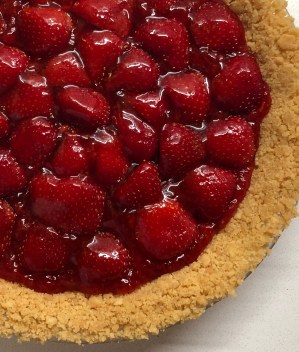 marveled how something so easy could be so, so good. Farm fresh strawberry season is fleeting, like good memories, and fresh berries are what you want here, so hit the farmer’s market (as Maria did weekly) to get the freshest you can find.
PREPARATION
Two quarts farm fresh strawberries, picked over with the prettiest berries set aside (about 12-14 berries).
9-inch pie pan
Crust:
- 10 oz finely crushed Walkers or Lorna Doone shortbread cookies
- 6 Tbs melted butter
- 1Tbs sugar
Combine crushed cookies, butter and sugar in a bowl and toss with a fork or your hands until well combined. Press mixture evenly into bottom and sides of pie pan. Freeze crust for at least 30 minutes.
Filling:
- ½ – ¾ c sugar (to taste depending on berry sweetness)
- 3 Tbs cornstarch
- 3 c diced strawberries
- 1 Tbs fresh lemon juice
In a small bowl, whisk together the sugar and cornstarch. Set aside. In a medium bowl, mash strawberries with a potato masher until goopy. Whisk in the sugar/cornstarch and lemon juice. Transfer to a medium saucepan and bring to a boil, stirring often. Let cook 2-3 minutes until thickened and jammy. Give it a couple of stirs, remove from heat, and pour into bowl to cool to room temperature.
Pour the cooled filling into the prepared pie shell and chill for at least 2 hours to fully set.
Serving:
- ¼ c strawberry preserves, melted and strained
- 12-14 reserved strawberries, cored and sliced in half
- Freshly whipped cream
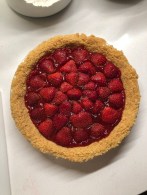 Arrange berries, cut side down, over the pie filling, pressing down lightly so the edges submerge a bit. With a pastry brush, lightly dab the berries with the melted preserves to glaze.
 Serve immediately with fresh whipped cream on the side. Should you have any leftovers, the pie keeps 1-2 days, covered with plastic wrap and refrigerated. But, between dessert and breakfast servings, you’ll finish it within 24 hours.
NOTE: This recipe works equally well with fresh peaches. With peaches, I use turbinado sugar and a pinch of cinnamon plus a graham cracker crust.
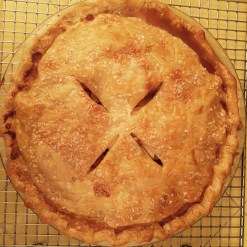 doesn’t know when to quit, am I right?
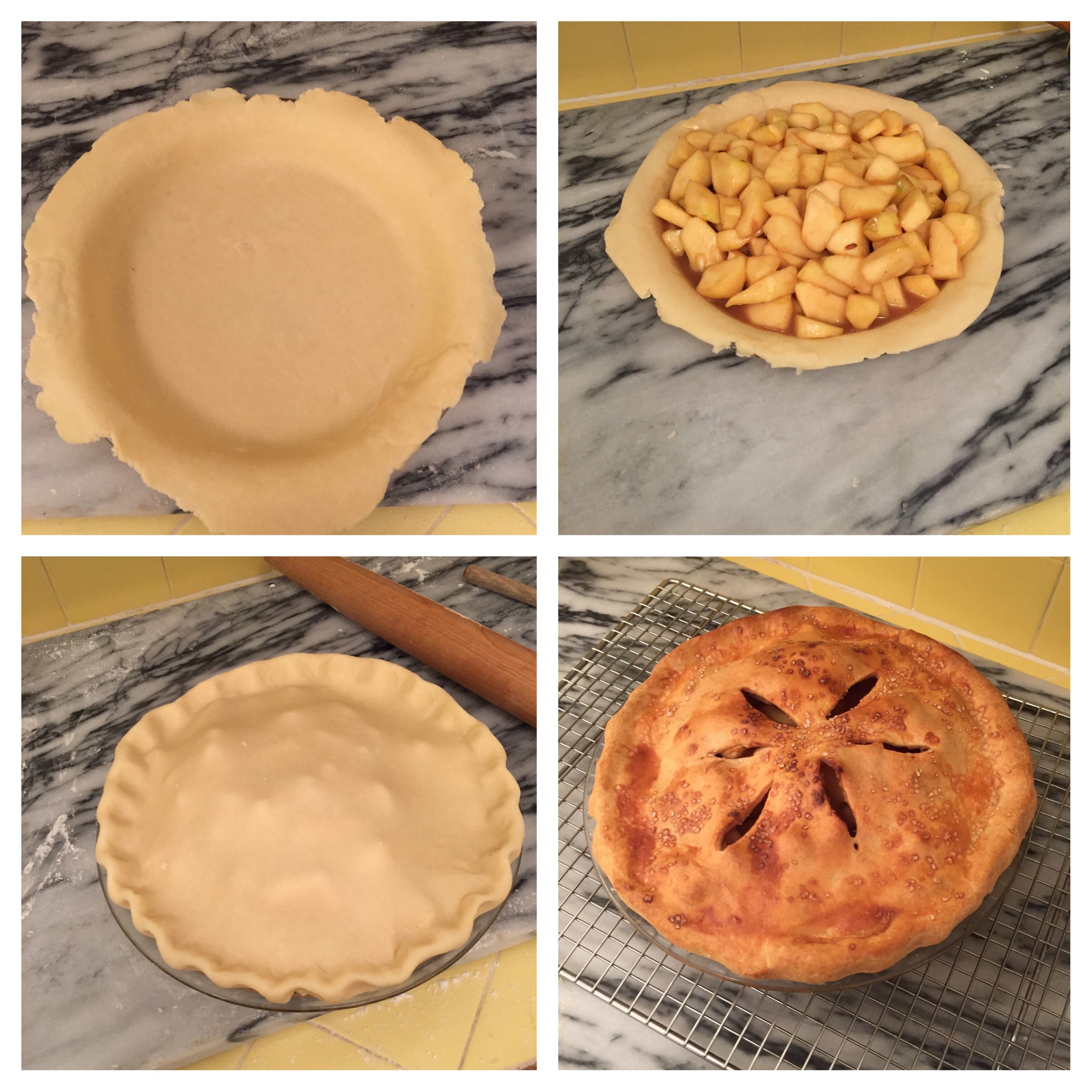
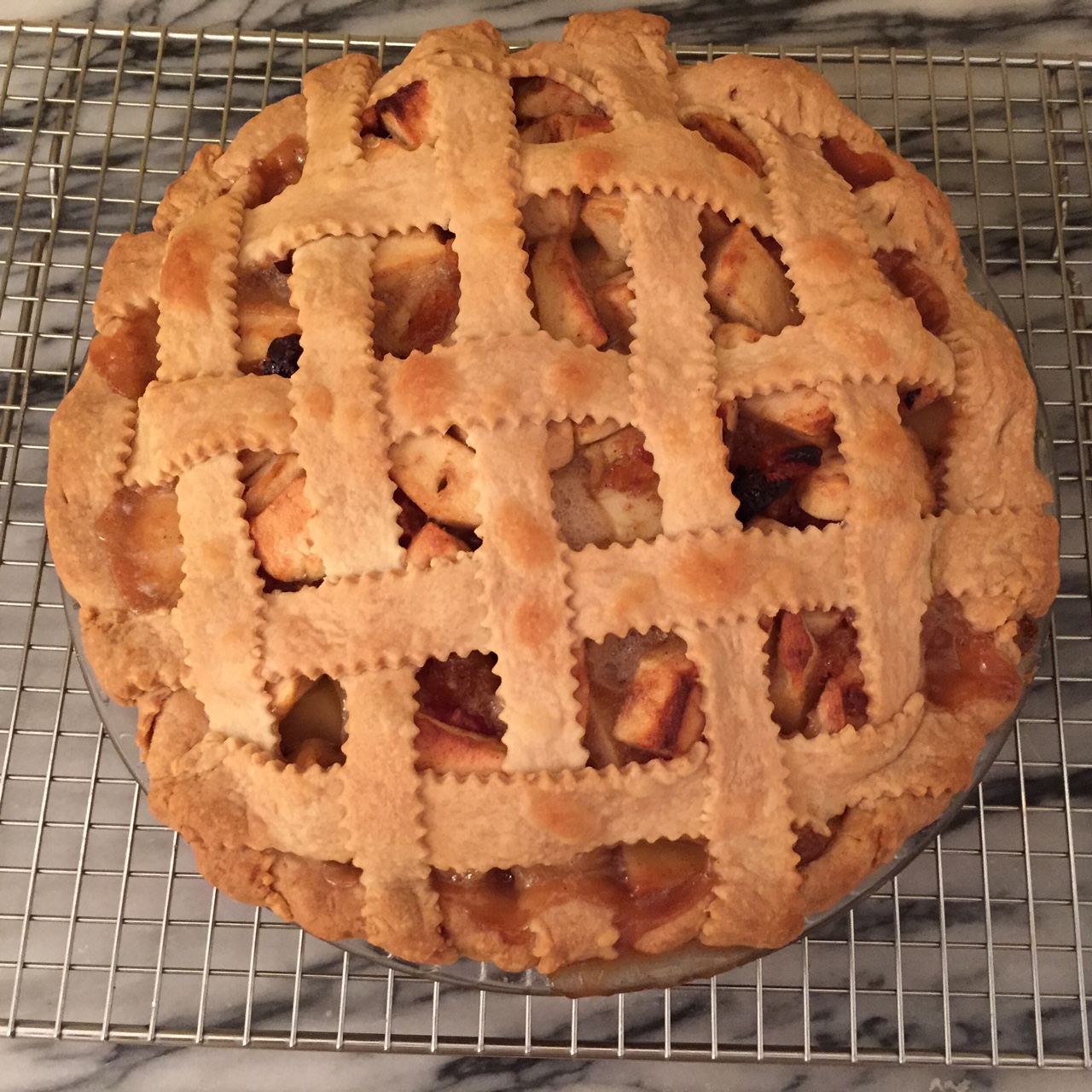
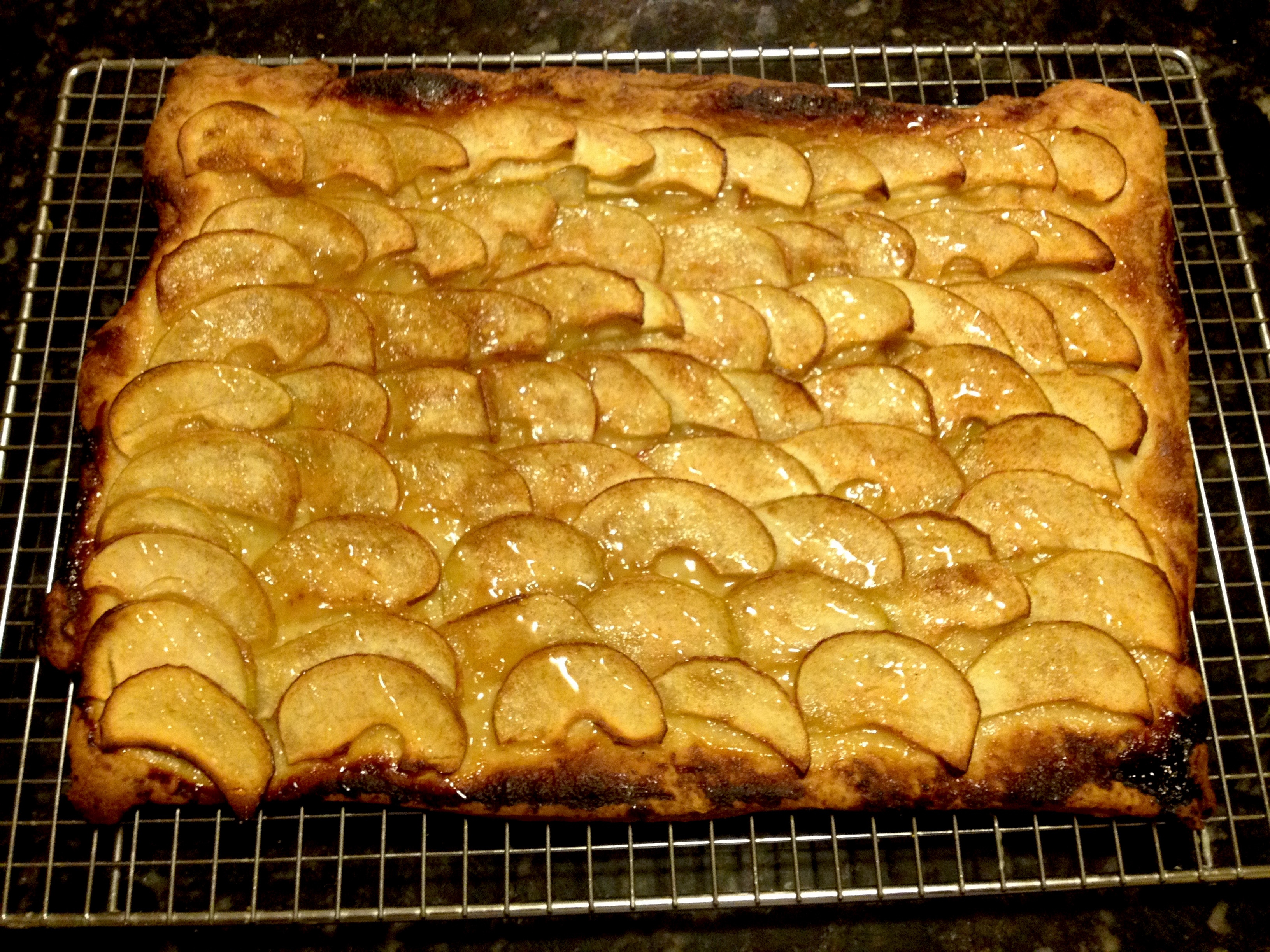
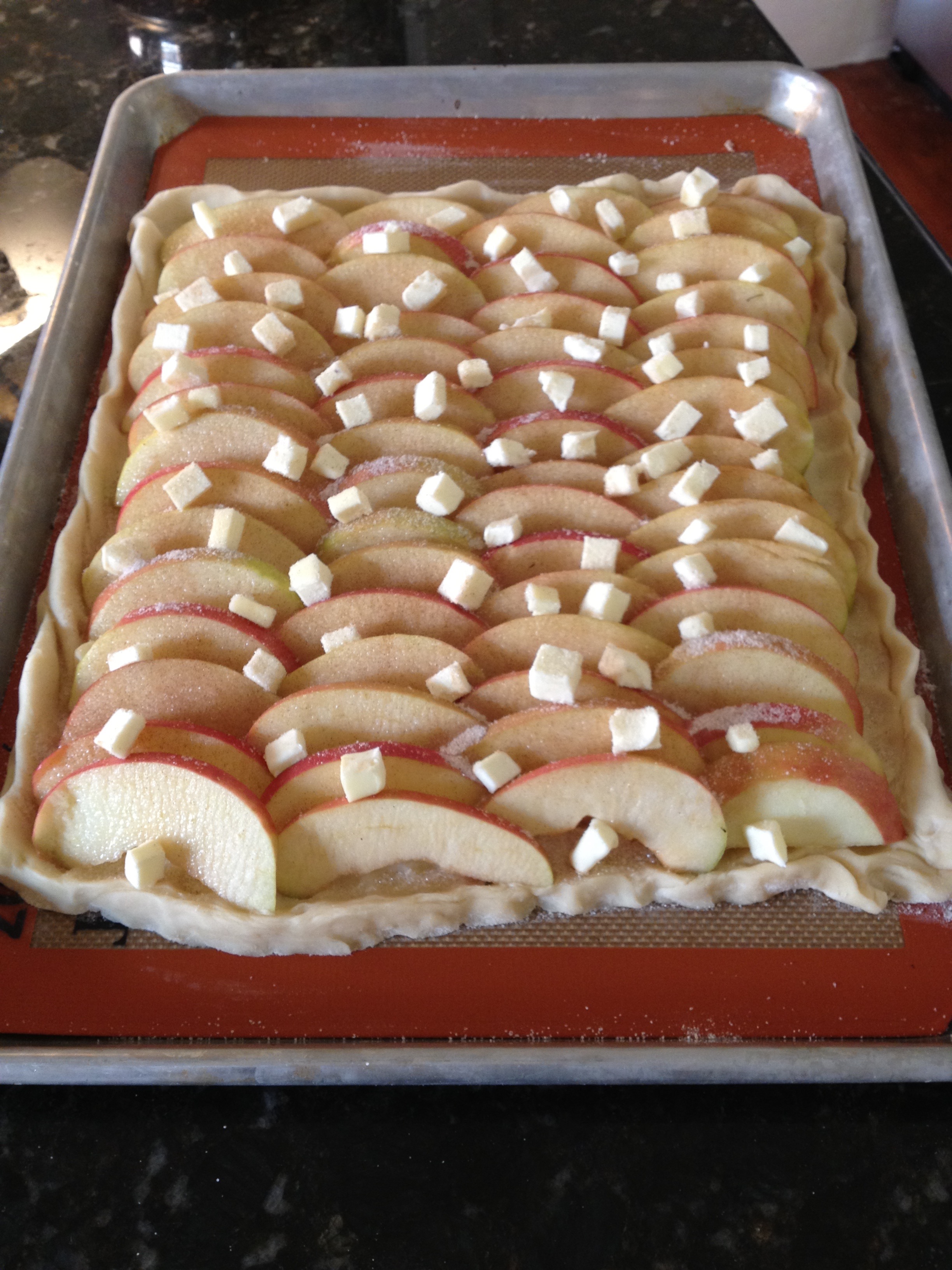
 cider to about ¼ c of syrup. Let me tell you, that cider syrup is sensational! I used it to glaze the top of the tart. I kept coming back to it in my mind, so when I decided to make a pie, I started there. Added a few spices and reduced it down. Still. so. good. I used it as the sweetener for apples.
 Use your favorite crust recipe for a double crust pie. I always go all butter, but I know some of ya’ll like your Crisco. If it tastes good to you, it’ll taste good in this pie.
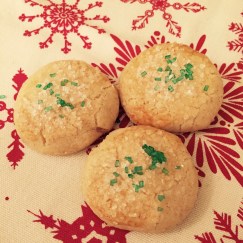 may never want to eat another cookie again! Until next year. Or next week. You know.
 are shortbread delicate so it’s best to store in a sturdy airtight container. (They don’t really ship well either.)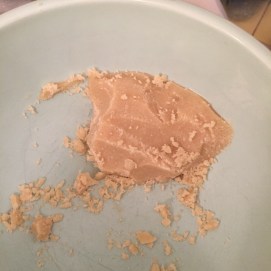
 bookstore on Third Street called The Cook’s Library. It was devoted entirely to cookbooks. It was heaven. I’d plunk myself down on the floor and lose myself for an afternoon reading about European pastry. The staff were always friendly and nice. It was heaven. It closed in 2009 after 20 years. I miss it.
 to handle the soft dough.
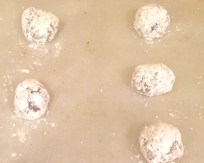 Place granulated sugar and confectioners’ sugar in separate shallow dishes. Working with 2 tablespoons dough (or use #30 scoop), roll into balls. Because the dough is so soft make your balls by gently tossing the dough back and forth in your hands. Immediately drop the dough balls into the granulated sugar and gently roll to coat. Transfer dough balls to confectioners’ sugar and roll gently to coat evenly.
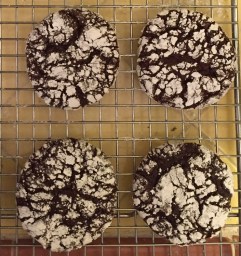 begun to set but centers are still soft (cookies will look raw between cracks and seem underdone), about 12 minutes, rotating sheet halfway through baking.



 hands to my hot face, smelled oranges and cinnamon, and remembered my mother’s hands, strong and capable, showing me how to roll dough.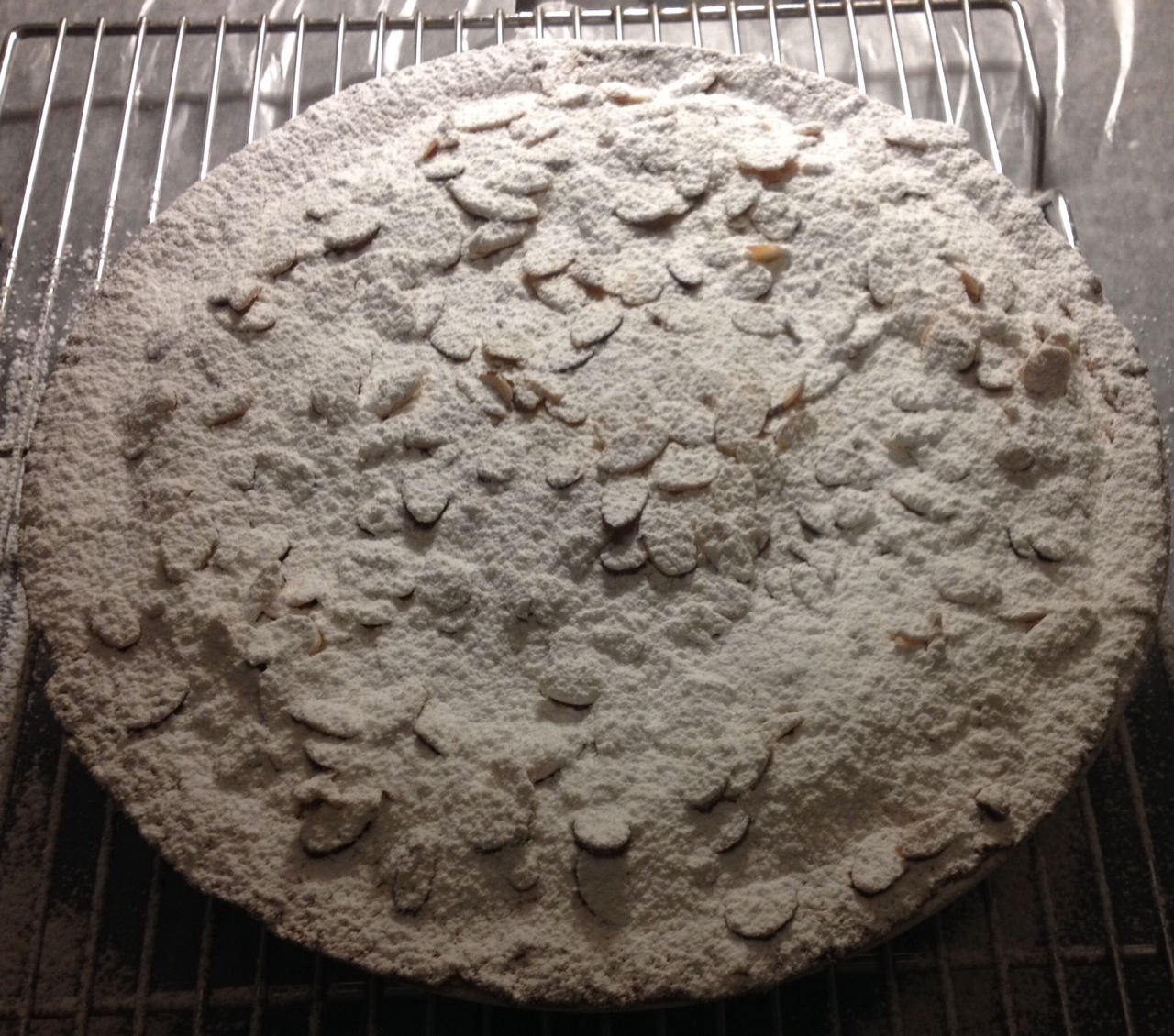

 s no different. I assembled the bottom crust in pieces and for the top, I rolled it between waxed paper sheets and chilled it for 10 minutes. It worked, but it took work to a
 chieve and it was, in the end, too thick. The crusts I had in Italy were very thin. Mine was about 1/8-inch and a bit like al dente pasta. (The ricetta did not call for blind baking the bottom crust, but next time I will because the pastry gives me such a hard time.)
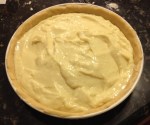 ornstarch as a thickener; it also called for what, in my opinion, was a huge amount of zucchero. The flavor was terrific (if sweet) with the lovely limona and vaniglia notes. The texture was a bit off, not super smooth like you get with cornstarch. Next time I would dial up the limona and vaniglia, cut the zucchero by a third, and use cornstarch in the crema.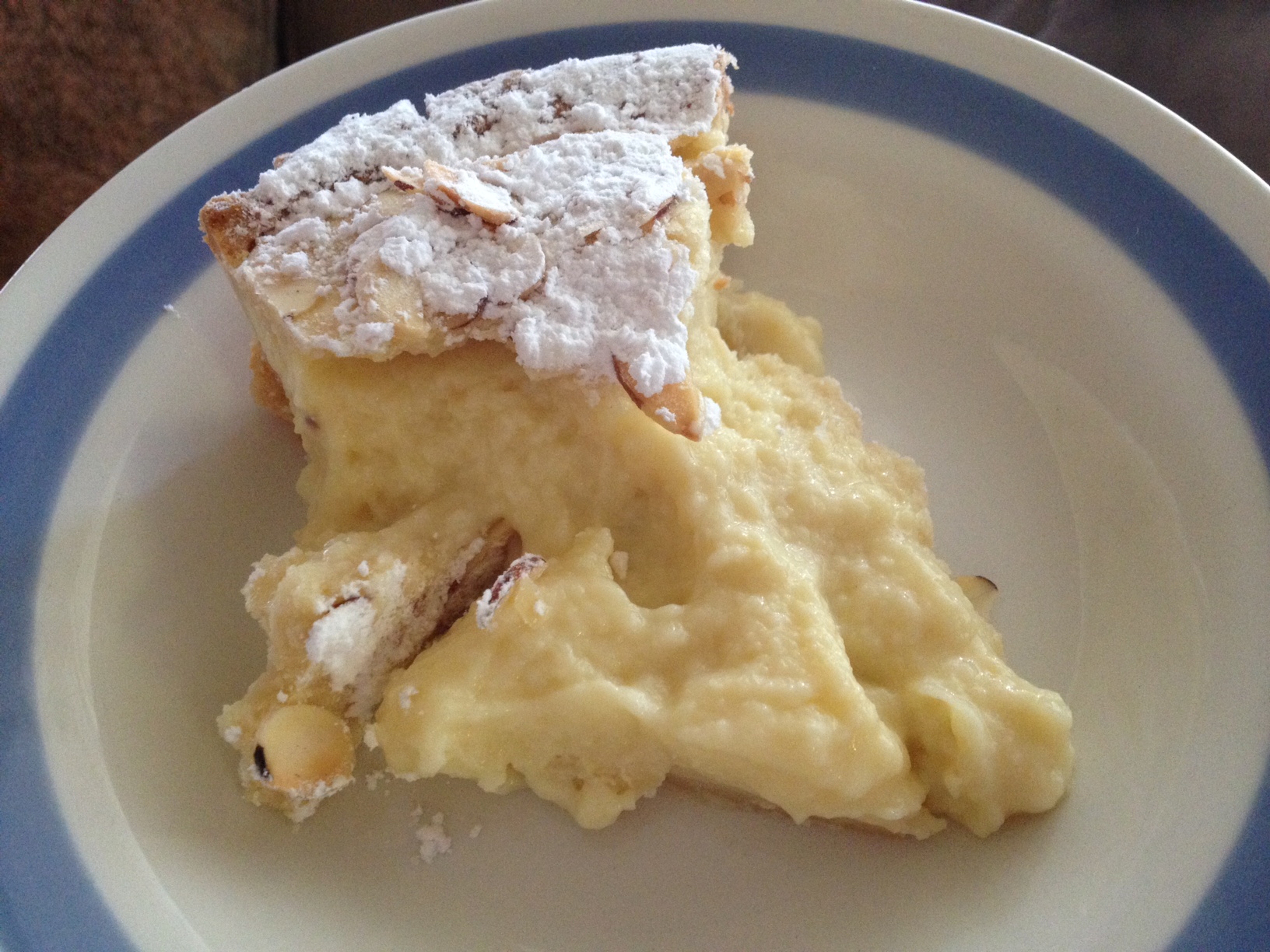

 I Brake for Bakeries